
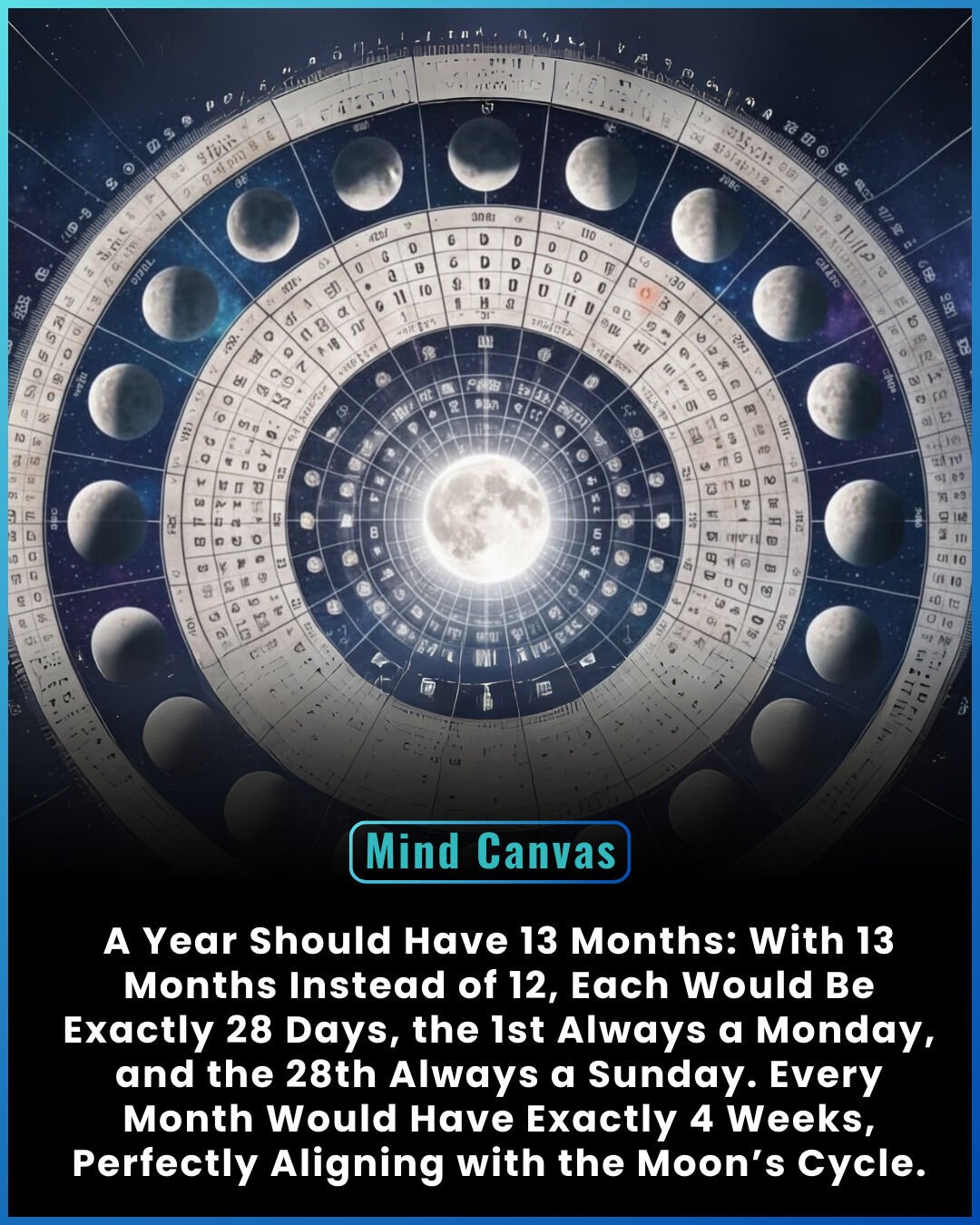
Imagine a calendar with 13 months instead of 12. In such a system, each month would have exactly 28 days, starting on a Monday and ending on a Sunday, creating a perfectly uniform structure. Every month would consist of exactly four weeks, eliminating the fractional weeks that make our current calendar irregular.
This structure would also align more closely with the lunar cycle, offering a natural rhythm to our months. Currently, the mismatch between the solar year and the lunar month means that months shift gradually against the phases of the moon, but a 13-month calendar would create a more harmonious connection with these natural cycles.
Beyond practicality, a 13-month system could simplify scheduling, planning, and record-keeping. With predictable weekdays and months, recurring events and fiscal planning would be far easier to manage. While changing the calendar globally would be a massive undertaking, exploring such ideas highlights how humans have continually tried to align timekeeping with nature, science, and daily life.



0 Comments